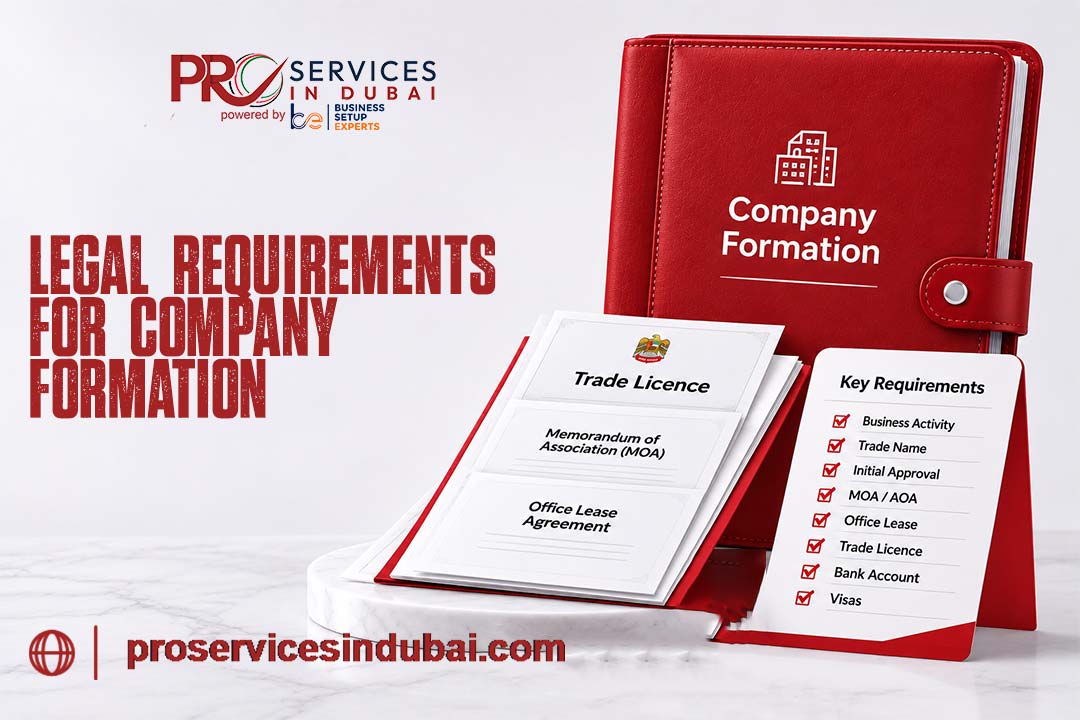
Legal Requirements for Company Formation determine whether a new business can operate legally in the UAE. You may have a name in mind, a website waiting to go live and a clear idea of the customers you want to reach. But in the UAE, the route from idea to licensed business involves a set of decisions that need to fit together: what the company will do, which authority will license it, who will own it, where it will operate and whether the activity needs extra approval.
Getting those decisions right is less about completing a long checklist and more about avoiding a mismatch. A licence that does not cover the real work of the business can cause trouble later. So can choosing a workspace that is not suitable for the activity, or assuming that a free zone company can carry out every kind of mainland work without further arrangements.
There is no single set of requirements that applies to every new UAE company. The details change with the emirate, licensing authority, legal structure and business activity. This guide walks through the main legal points in the order a founder should consider them, while flagging where the answer depends on the company’s circumstances.
Start With What the Business Will Actually Do
Before choosing a package or reserving a name, describe the business in plain language. What will it sell? Which services will it provide? Will it work with consumers, other companies or overseas clients? Will it hold stock, use specialist equipment, employ professionals or serve customers at a physical location?
Those answers help identify the correct licensed activity. The activity, in turn, can affect the type of licence, the legal forms available, the approvals needed and the premises the company must have. A consultancy and a food production business may both be new companies, but their regulatory paths are very different.
It is tempting to select a broad activity because it seems to leave room for future growth. That can backfire if the wording does not cover the work the company actually performs. Some activities can be combined under one licence; others need separate permissions or are not accepted together. Check the activity list with the intended authority and ask for clarification where the business model does not fit neatly into one category.
A useful preparation step: Write a short description of the company’s real services and products before speaking to a formation provider. It gives the authority or adviser something concrete to assess.
Choose a Legal Structure That Fits the Owners
The legal form is not just a label on the licence. It affects how the business is owned, who can manage it, how decisions are documented and, in some cases, the liability attached to the owners. The available choices depend on the authority and activity.
Limited liability company (LLC): An LLC is a common choice for businesses with one or more shareholders. It is a separate legal entity, and the liability of its owners is generally limited under the applicable law. The company’s constitutional documents should set out ownership and management arrangements clearly.
Sole or professional establishment: Some individual or professional activities may be carried out through an establishment owned by one person. Liability and any service-agent requirements depend on the relevant rules and activity.
Branch: An existing UAE or overseas company may be able to register a branch to conduct approved activities. The parent company will usually need to provide supporting corporate documents and authorize the branch arrangement.
Free zone entity: Free zones offer their own company forms and registration rules. The exact names, shareholder limits, eligibility and operating conditions vary from one zone to another.
Think beyond the first year. If you expect to bring in a business partner, transfer shares, raise investment or expand into a regulated activity, ask how the chosen structure will accommodate that change. A low initial fee is not much of a saving if the company has to restructure soon after launch.
Mainland or Free Zone: Make the Choice on Practical Grounds
The choice between mainland and free zone formation should follow the company’s intended operations, not a general claim that one route is always better. Both can suit foreign founders, but the permissions and operating conditions are not identical.
Mainland company: A mainland business is licensed by the competent economic authority in its emirate. It may suit a company that needs to serve customers across the local UAE market or operate from premises outside a free zone. Many activities permit full foreign ownership, although some strategic or regulated activities can carry additional conditions.
Free zone company: A free zone entity is registered under the rules of its chosen zone. The zone may offer a particular mix of licence activities, workspace options and visa arrangements. A free zone licence does not automatically give the company unrestricted permission to carry out every activity directly in the mainland market.
Look closely at the actual activity permissions, the company’s likely customer base, office requirements, visa allocation and renewal costs. If mainland sales or contracts are central to the business, clarify the permitted route before selecting a free zone. If the business is mainly international, compare zones on the services and facilities the company will genuinely use.
The right question is not simply, “Which licence is cheapest?” It is, “Which licence lets this business operate in the way it intends to operate?”
Check Ownership Eligibility Before Filing
Foreign investors can own 100% of many companies in the UAE, including many mainland businesses. That is an important change from older assumptions, but it should not be stretched into a promise that every activity has the same ownership rules. Strategic and regulated sectors may have specific conditions, approvals or restrictions.
Confirm the ownership position for the exact activity and legal form. If there is more than one shareholder, settle the share split and decision-making arrangements early. Founders sometimes agree these points informally and leave the paperwork until later. That is risky: the official records and company documents need to reflect the arrangement the owners have actually agreed.
Where a shareholder is another company, the authority may ask for corporate records such as its certificate of incorporation, constitutional documents, a board resolution or a power of attorney. Overseas documents may need notarization, legalization, attestation or translation. The correct process depends on where the documents were issued and which authority will receive them.
Reserve a Trade Name That Meets the Rules
A trade name needs to be acceptable to the licensing authority. It should be distinguishable from names already on the register and should not include restricted, misleading or prohibited wording. Certain terms, professional descriptions and references to regulated fields may need additional evidence or approval.
Prepare a few alternatives rather than relying on one preferred name. Check spelling, meaning and any third-party brand rights before submitting it. A name reservation is only one part of formation; it does not give the company permission to start trading.
Initial Approval Is a Step, Not the Finish Line
Many formation routes include an initial approval or similar preliminary clearance. It generally allows the application to move forward, subject to the remaining requirements. It is not the final trade licence and should not be treated as authority to begin the licensed activity.
The business may also need clearance from a specialist regulator. This is more likely where the activity involves a regulated profession, financial services, healthcare, education, food, transport or another controlled sector. The relevant regulator may set conditions relating to qualifications, staff, equipment, premises or operating procedures.
Find out about these requirements before signing a lease or buying equipment. It is frustrating to discover late in the process that the chosen premises or business model does not meet an approval condition.
Prepare the Documents for the Actual Application
The document list depends on the legal form, ownership, activity and licensing authority. A simple application with individual shareholders may need less paperwork than a branch or a company owned by another corporate entity. Commonly requested items include:
- Passport copies and identification details for shareholders and proposed managers.
- Application forms, proposed trade name and a clear description of the activities.
- Shareholder and manager information, including the intended ownership split.
- Memorandum of Association or other constitutional documents, where applicable.
- Corporate documents and a board resolution if a company will be a shareholder.
- Power of attorney or representative authorisation if another person will submit or sign documents.
- Business plan, professional qualifications or activity-specific evidence where required.
- Premises, tenancy or workspace details if required by the chosen authority.
- External approvals or supporting certificates for regulated activities.
For documents issued outside the UAE, ask about certification and translation before sending them for processing. Requirements can differ by country and authority. It is also worth checking every name, passport number and company detail across the application. A small mismatch can lead to a request for correction and slow the file down.
Make the Ownership Documents Clear
Where the chosen legal form requires a Memorandum of Association or similar constitutional document, it should reflect the company the owners intend to establish. Depending on the structure, it may set out the company’s objectives, shareholders, capital, ownership percentages, management powers and rules for transferring shares.
These documents deserve more attention than a quick signature. If one founder will handle daily management while certain major decisions require approval from all owners, the arrangement should be documented in an appropriate way. A separate shareholders’ agreement may also be useful, provided it works consistently with the company’s constitutional documents and applicable law.
The signing process may involve notarization or another prescribed form of execution. Confirm the method required by the relevant authority instead of assuming that a standard template will be accepted.
Arrange Premises That Match the Activity
A company generally needs a registered address or approved workspace. Depending on the authority and activity, that could mean a conventional office, a shared workspace, a flexi-desk, a retail unit, a warehouse or a specialist facility.
A workspace option that works for a consultancy may not work for a business storing goods or serving customers on site. Some activities have specific premises, safety or inspection requirements. The office arrangement can also affect visa eligibility or the number of employees the company may sponsor.
Before committing to a lease, check that the premises are suitable for the activity and that the required tenancy evidence can be provided. Read the lease terms carefully, including renewal conditions and charges that may not be included in the advertised licence package.
Understand Capital and the Real Cost of Setup
There is no one share-capital requirement for every UAE company. The position depends on the legal form, activity, jurisdiction and any sector-specific rules. Some authorities request capital details as part of registration; certain regulated businesses may have minimum capital or financial-resources requirements.
Do not assume that a stated capital amount must always be deposited before a licence is issued. Equally, do not assume that capital evidence will never be requested. Confirm the rule for the company being formed.
Budget for more than the licence itself. Registration, premises, visas, professional approvals, document certification, insurance where relevant, accounting and annual renewals can all affect the total. Ask for a breakdown of the costs and identify which items are recurring.
Beneficial Ownership and Company Records
UAE companies are subject to transparency and beneficial ownership requirements, although the exact procedures and any exclusions depend on the entity and its regulatory status. In broad terms, companies may need to identify the natural persons who ultimately own or control them and keep the required information available to the relevant registrar.
If the shareholding or control arrangements change, the company should check whether its records or filings need to be updated. Keep copies of the licence, constitutional documents, shareholder and manager details, resolutions and other corporate records in an organised place. These documents may be needed for renewals, banking and future amendments.
Do not rely on a generic online checklist for this part. Confirm the requirements that apply to the company’s own registrar and legal form.
Tax and Accounting Start After Incorporation
A newly registered company should consider its tax position from the outset. Corporate tax registration, returns and payment obligations depend on the company’s circumstances and the rules in force. The standard UAE corporate tax framework applies a 0% rate to taxable income up to the relevant threshold and 9% to taxable income above it. A Qualifying Free Zone Person may be eligible for a 0% rate on qualifying income if the conditions are met; simply holding a free zone licence does not make all income tax-free.
VAT is a separate question. A business may need to register when its taxable supplies and imports reach the mandatory threshold. Voluntary registration may be possible in some cases below that threshold, subject to the relevant test. VAT returns and records should not be confused with trade licence renewal.
The company should also understand whether it must prepare financial statements, obtain an audit or meet other reporting duties. These obligations can depend on the legal form, free zone rules, regulated activity and applicable law. Even a small company benefits from keeping clear records from its first transaction.
Employment and Immigration Responsibilities
If the company plans to hire staff or sponsor residence visas, it will need to follow the relevant immigration and employment procedures. Depending on the jurisdiction and worker, this may involve establishment files, work permits, employment contracts, medical fitness checks, identity registration and other formalities.
Visa availability is not the same for every licence. It may depend on the package, office arrangement, premises size and the rules of the authority. Confirm the likely allocation before choosing a setup option based on an assumed number of visas.
Employers should also understand the employment rules that apply to them, including contracts, wages, leave, workplace safety and end-of-service entitlements where relevant. Free zones may have their own administrative processes or employment frameworks, so check the position for the company’s location.
A Trade Licence Does Not Guarantee a Bank Account
Opening a business bank account is a separate decision made by the bank. A valid trade licence is important, but it does not guarantee approval. Banks carry out their own due diligence on the owners, managers, source of funds, activity, customers, suppliers, expected transactions and countries involved.
Be ready to explain the business in practical terms. A clear business plan, contracts, invoices, supplier details and evidence of the source of funds may help the bank understand the company. Each bank has its own requirements and the final decision remains with it.
Keep the information consistent. If the licence says the company provides consultancy services, but the bank application describes a different business model, the bank may ask for clarification. Accurate records make that conversation easier.
What the Company Must Keep Doing After Registration
The licence is the beginning of the company’s formal life, not the end of its legal responsibilities. Once the business is operating, it should keep track of obligations such as:
- Renewing the trade licence and related permits on time.
- Updating registered details when ownership, management, address or activities change.
- Maintaining beneficial ownership and corporate records.
- Meeting applicable corporate tax and VAT registration, filing and payment duties.
- Keeping accounts and preparing financial statements or audit reports where required.
- Renewing premises, immigration and employee-related documents where applicable.
- Obtaining approval before making changes that require the authority’s consent.
A simple compliance calendar can make a real difference. Record renewal dates, filing deadlines and the person responsible for each task. If the company changes its activity, address or ownership, check the amendment process before making the change in practice.
Mistakes That Can Create Problems Later
Choosing a licence before defining the work: The company may end up with an activity description that does not cover its real services.
Assuming every activity has the same ownership rules: Many businesses allow full foreign ownership, but regulated or strategic sectors may be different.
Treating initial approval as permission to trade: The final licence and any other required approvals still matter.
Using a generic document list: A corporate shareholder, overseas parent company or regulated activity can add paperwork.
Taking premises before checking the rules: The chosen workspace may not be suitable for the activity or visa needs.
Believing a free zone licence means all income is tax-free: Any preferential tax treatment depends on meeting the relevant conditions.
Leaving compliance until renewal time: Tax, records, employment and permit duties can arise throughout the year.
Most of these problems are avoidable. Take the time to confirm the activity, legal form, jurisdiction, ownership and premises before spending money on the rest of the process.
When Professional Formation Support Is Useful
Some founders can manage a straightforward application themselves. Others are dealing with several shareholders, overseas corporate documents, specialist approvals or a business model that does not fit neatly into one activity category. In those cases, having someone coordinate the administrative process can save time and reduce avoidable back-and-forth.
A formation or PRO support team can help organise documents, coordinate submissions and follow up on administrative steps. That support is not a substitute for specialist legal or tax advice where the question calls for it. Its value is in keeping the process organised and making sure the right questions are raised with the relevant authority before decisions become costly.
Related PRO Services Resources
For help with company paperwork, visa administration and the practical tasks that can continue after registration, you can read more about PRO Services in Dubai, Corporate PRO Services Dubai, List of PRO Services in Dubai, How to Apply for a Visa, UAE Visa and PRO Services for Expats, Professional PRO Services in Dubai: What Are PRO Services?. These pages give more detail about the support available at different stages of running a UAE business.
FAQs
Q1. What are the legal requirements for company formation in the UAE?
The usual steps include choosing an approved activity, selecting an eligible legal form and jurisdiction, reserving a trade name, obtaining initial and any activity-specific approvals, submitting the required shareholder and manager documents, arranging an approved address where required, and receiving the final licence. The precise requirements depend on the authority and activity.
Q2. Can a foreign investor own a company outright in the UAE?
Foreign investors can own 100% of many UAE companies, including many mainland and free zone businesses. Some strategic or regulated activities may have additional conditions, so confirm the ownership rules for the exact activity before applying.
Q3. Do I need an office to register a UAE company?
A registered address or approved workspace is generally required, but the permitted option varies. Some authorities allow shared workspace or flexi-desk arrangements. Activities involving customers, stock, production or specialist services may need dedicated premises.
Q4. Can I start trading after receiving initial approval?
No. Initial approval is a preliminary stage in the application. The company must complete the remaining formation requirements and obtain its final licence, along with any other permissions required for its activity, before it begins operating.
Q5. What happens after the company receives its trade licence?
The company may still need to meet tax, accounting, beneficial ownership, employment, immigration and licence-renewal duties. It should also update its records when ownership, management, address or activities change. The exact obligations depend on its legal form and jurisdiction.
Conclusion
The legal requirements for company formation in the UAE are easier to manage when the decisions are made in the right order. Start with the business itself: what it will sell, which services it will provide and where it expects to operate. That description helps identify the activity and licensing route. From there, the legal structure, ownership arrangement, approvals and premises can be assessed with a clearer picture of what the company needs.
It is worth resisting the temptation to choose a setup only because it appears quick or inexpensive. A licence that does not match the business, a workspace that fails to meet activity conditions or an ownership arrangement that has not been properly documented can create more work later. Compare the full operating requirements, not just the first invoice. Mainland and free zone options can both be suitable, but the right fit depends on the company’s customers, activity and plans.
Registration is also only the first stage. The company may have tax and accounting duties, beneficial ownership records to maintain, employee and immigration procedures to follow, and licences or permits to renew. These responsibilities should be part of the business plan from the beginning. Keeping accurate records and tracking deadlines is usually far easier than trying to rebuild the company’s paperwork after a problem appears.
If you are preparing to establish a business, take time to confirm the requirements for your exact activity and jurisdiction before committing to premises or paying for a package. Where several documents, approvals or administrative steps are involved, experienced support can help keep the process moving in an orderly way. You can learn more about
PRO Services in Dubai or speak with the team on WhatsApp about the administrative steps involved in your company formation.