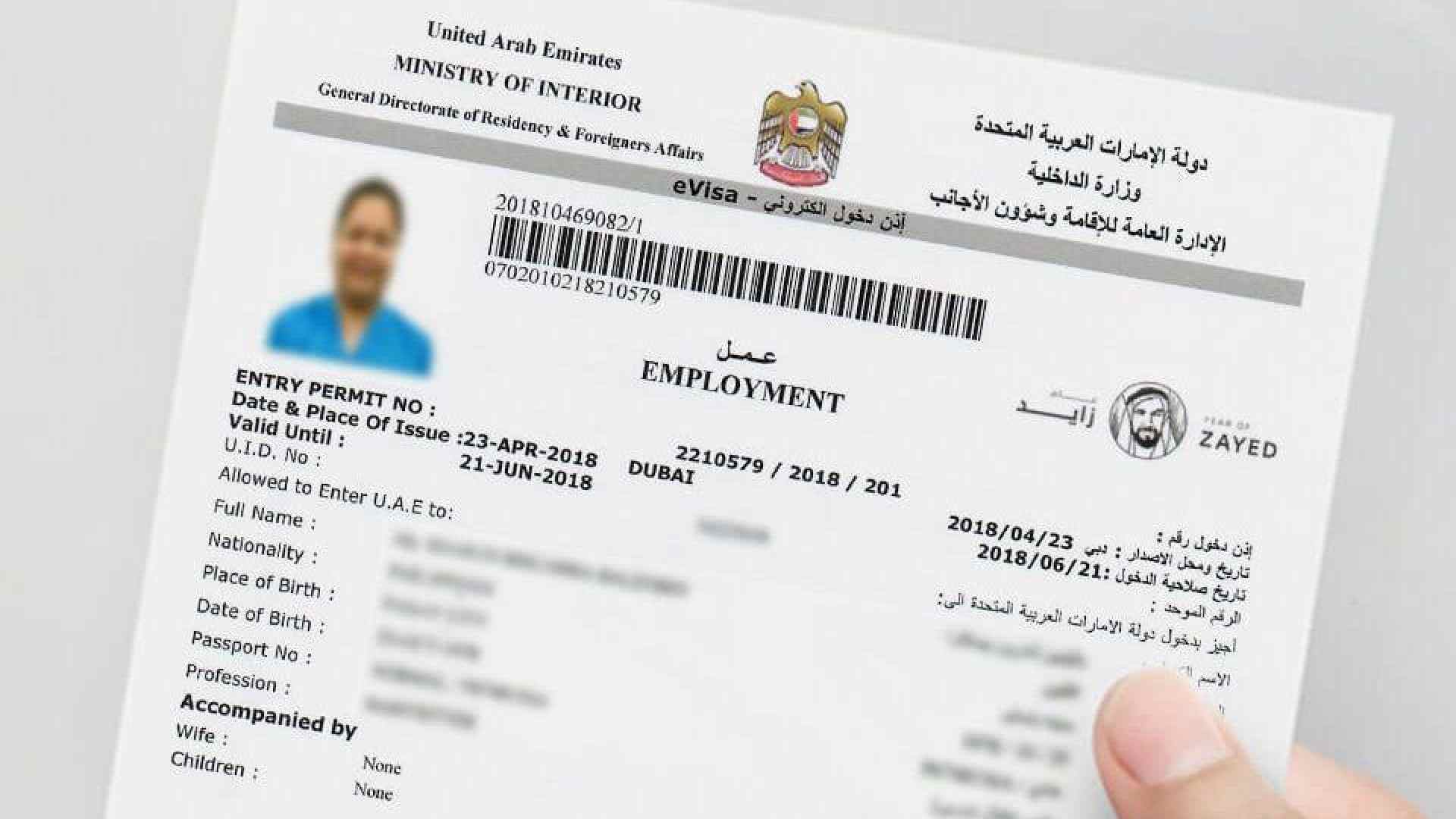
Employment Visa is an important part of starting a new job in Dubai, as it allows eligible foreign employees to live and work in the UAE under the required employer sponsorship. Getting a job offer in Dubai is a big moment. You may already be thinking about your first day, where you will live and how soon you can join the team. Then someone from HR asks for your passport copy, photograph and certificates. A few days later, there is another form to sign, an appointment to attend and a question about whether you need to be inside or outside the UAE for the next step.
For a new employee, the process can feel like a string of unrelated requests. It is easier to follow when you understand the purpose behind each one. An Employment Visa is not simply a sticker or a single approval. It is part of a process that gives a foreign employee the required permission to work and live in the UAE under the employer’s sponsorship.
The employer normally leads the application. The employee still has a role: provide correct information, review the employment Visa terms, attend the required appointments and ask questions when something is unclear. This guide walks through the usual private-sector route in Dubai, what can affect the process and what both sides should check before treating the paperwork as finished.
What does an Employment Visa allow you to do?
People often use the phrase “Employment Visa” to describe the full arrangement that allows them to live in the UAE and work for a sponsoring employer. In practice, more than one step is involved. Work authorisation and residence permission are connected, but they are not the same thing.
The work permit is the permission linked to taking up employment. The residence process deals with the employee’s right to live in the country. A typical employer-sponsored application brings these parts together, along with medical fitness and Emirates ID formalities.
This distinction matters when you are already in Dubai on a visit visa or another status. A job offer does not, by itself, give you permission to start work. Wait until the correct work authorisation is in place and follow the employer’s instructions about when you can legally begin.
Who is responsible for arranging Employment Visa?
In a standard private-sector arrangement, the employer sponsors the employee and coordinates the application. The company must be eligible to hire and must follow the process that applies to its own licence and jurisdiction.
The employee is usually asked to provide personal documents and information needed for the application. Depending on the job, the employer may also need education certificates, proof of experience or approval from a professional regulator. A role in a regulated field can involve additional steps that do not apply to every office job.
If the employer is based in a free zone, parts of the process may be handled through that free zone’s authority. Ask HR which route applies to your company. A colleague who joined a mainland business may have followed a different procedure.
The Employment Visa process, in the order you are likely to experience it
You receive an offer and confirm the details
Before any application is filed, take time to read the job offer. Check the position, salary, working hours, benefits, probation terms and expected start date. If the company has discussed housing, transport, insurance or other benefits, make sure you understand how those arrangements are recorded.
Keep a copy of the offer you sign. If the final employment contract contains a term you do not recognised, ask the employer to explain it before you proceed. Sorting out a misunderstanding at this stage is easier than trying to resolve it after you have moved.
The employer starts the work authorisation
Once the offer is accepted and the required information is ready, the employer begins the work permit process through the channel that applies to its establishment. The company may need to confirm its own records and show that the role is consistent with its licensed activity.
Some jobs require a qualification or professional approval. If you are joining a healthcare, education, engineering or another regulated profession, ask early whether your certificate needs attestation or whether you must hold a professional licence before you can take up the role.
The entry or status-change step is arranged
If you are outside the UAE, the process may involve an employment Visa entry permit so you can travel for the remaining formalities. If you are already in the country, a change-of-status step may be needed instead. The employer or its authorised representative should confirm the route for your circumstances.
Do not assume that an application has automatically changed your status just because it has been submitted. Check the document or confirmation you receive and follow the stated validity period and instructions.
You complete the medical fitness examination
Applicants aged 18 and above generally need a medical fitness examination as part of the residence process. The examination is completed through an authorised centre. The exact requirements and any follow-up depend on the applicable rules and the applicant’s circumstances.
Attend with the identification and application details requested. If the result is not ready or the centre asks you to return, let HR or the PRO contact know. They can help clarify which part of the application is waiting.
Your Emirates ID application moves forward
The Emirates ID is an important part of day-to-day life in the UAE. It is used for identity checks and many routine services, so make sure the personal details on the application are accurate.
You may need to attend a bio metrics appointment, depending on your circumstances and whether your bio metric data is already on record. Keep the application receipt and appointment information until the process is complete.
The residence formalities are completed
Once the required steps and checks are complete, the employer proceeds with the residence permit and final employment records. The residence validity depends on the applicable category and sponsor. Do not rely on a general statement that every Employment Visa lasts for the same period; check the validity issued in your own case.
Ask HR to confirm when your residence status is active, what happens next with your Emirates ID and whether any final document or company step is still outstanding.
Documents you may be asked to provide for Employment Visa
There is no single checklist that fits every occupation and employer. For a typical application, you may be asked for some or all of the following:
- A clear passport copy, with sufficient validity for the application.
- A recent photograph that meets the required format.
- A signed job offer or employment contract.
- Education certificates or professional qualifications, if relevant to the position.
- Attested or authenticated certificates where the role or application requires them.
- A professional licence or regulator approval for a regulated occupation.
- Details of your current UAE visa or Emirates ID if you are already in the country.
Before arranging an attestation or paying for a translation, ask the employer which document is required and what form it must take. A certificate prepared for one purpose may not automatically meet the requirements for another. It is better to confirm the checklist first than to spend time and money on the wrong process.
How long can the process take for Employment Visa?
People understandably want a date. They may have booked a flight, given notice at their current job or arranged accommodation around an expected start. But there is no reliable single processing time for every Employment Visa.
The timing can depend on how quickly the employer’s file is ready, the type of work authorisation, whether the employee’s documents are complete, the need for professional approvals and appointment availability. A straightforward case can move without much difficulty. A case with a missing certificate, inconsistent personal details or an employer-side issue can take longer.
Ask the company what has already been completed and what remains. A useful update is specific: for example, whether the work permit has been issued, whether an appointment is booked or whether a document is still needed. “It is in process” does not tell you what you need to do next.
Who pays the Employment Visa costs?
The total cost is not one fixed amount. Depending on the case, charges may relate to work authorisation, entry or status change, medical fitness, Emirates ID and residence processing. The amount can vary with the application type, employer classification, validity period and any extra requirements.
For UAE private-sector employment, employers are generally responsible for recruitment and employment-related costs that the law places on them. An employee should be cautious if asked to pay recruitment fees or repay costs that are the employer’s responsibility. If you receive a payment request, ask for a written explanation of what the amount covers before handing over money.
For employers, an itemized breakdown is useful too. It separates the provider’s service fee from official and third-party charges, and makes it easier to explain the process to a new hire.
If you are already in Dubai, can you change to an Employment Visa?
A person who is already in the UAE may be able to move to an employment-sponsored status through the appropriate change-of-status procedure. The employer must still arrange the required work authorisation and complete the residence formalities.
Tell HR what status you currently hold and provide accurate details from your existing visa or residence record. Do not make travel plans or start working based only on a verbal assurance that the change will be simple. Ask which step is required and wait for confirmation that you can proceed.
Mainland and free zone employment visa: why the route can differ
The outcome is similar: the employee needs the correct authorisation to work and the relevant residence status. The administrative route is not always identical.
Mainland employers generally follow the processes that apply to their establishment. Free zone companies may handle employee permits and related administration through their own free zone authority. The documents, service channels and sequence can vary.
If you are joining a free zone company, ask the HR team to explain the process it uses. That one question can prevent confusion when advice from a friend or an online checklist describes a different type of employer.
What commonly holds an application up?
A document does not match the information on another record
A different spelling of a name, an unclear passport scan or a missing page can lead to a request for correction. Check the files before sending them and use the same personal details consistently.
A qualification needs extra preparation
If the position requires an attested certificate or professional approval, leaving this until the application is underway can add time. Ask about these requirements when you accept the offer, not after you have booked your flight.
The employer needs to resolve an issue
The application depends on the employer as well as the employee. Company records, licence status or other establishment requirements may need attention before a new hire can be processed.
The employee’s current status has not been explained clearly
Someone already in the UAE may have a different next step from someone travelling from overseas. Make sure HR knows your current status and has the correct details.
A request is waiting for a response
Sometimes the file is not technically delayed; it is simply waiting for one missing document or action. Agree on who is checking the application and how you will be contacted if something is needed.
A few checks to make before your first day
- Keep a copy of the job offer and make sure you understand the main terms.
- Know who in the company is coordinating your application.
- Check your passport validity and the accuracy of your personal details.
- Ask whether your role needs an attested qualification or professional approval.
- Do not begin work until the correct authorisation is in place.
- Keep application receipts and appointment details until the process is complete.
- Ask for an explanation and breakdown of any payment request.
These are small steps, but they make it easier to spot a problem while there is still time to fix it. They also give you a record of what has been submitted and what the employer has told you.
Where PRO support fits into the process
For an employer, hiring does not stop at selecting a candidate. Someone still has to organise company and employee documents, coordinate the relevant applications, track appointments and respond when a file needs another piece of information. When several employees are being hired, these tasks can quickly become a job of their own.
A PRO service provider can help with document checks, application coordination and follow-up. This can be useful for a small company without a dedicated administrator or for a business with regular hiring activity. The provider does not take over the employer’s legal responsibilities and cannot promise an official approval. The practical benefit is having someone keep the administrative steps organise and communicate what is needed.
Before engaging a provider, ask exactly what is included. Does the service cover document review, appointment guidance and follow-up? Are official and third-party charges separate? Who will contact the employee if something is missing? A clear answer to these questions is more useful than a broad promise to “handle everything”.
Choosing help without losing sight of your responsibilities
A good provider should be willing to explain the process in plain language. You should know who is handling the file, how your documents will be shared and what you are expected to do yourself.
Be cautious of guaranteed-approval claims or advice to start working before the correct authorisation is in place. An experienced administrator can help prepare and coordinate an application, but the final decision belongs to the relevant authority. The employer and employee still need to provide accurate information and meet the requirements that apply to them.
If your business is coordinating several employee applications, it may help to understand the wider PRO Services in Dubai available and whether ongoing corporate PRO services in Dubai would make administration easier. You can also review the different PRO services available in Dubai to see which tasks may sit alongside employee paperwork. For a broader view of the application journey, read the guide on how to apply for a visa. Employees who are new to the country may find the overview of UAE visa and PRO services for expats useful, while the article explaining what professional PRO services in Dubai involve gives more context about the role of a PRO provider.
FAQs
Q1. Is an Employment Visa the same as a work permit?
No. They are related but serve different purposes. A work permit is the authorisation connected to employment, while the residence permit allows the employee to live in the UAE. The employer coordinates the required steps for the specific case.
Q2. Who applies for an Employment Visa in Dubai?
For a typical private-sector job, the employer sponsors the employee and coordinates the work authorisation and residence process. A free zone employer may follow the procedures set by its own authority.
Q3. Can I start working while I am on a visit visa?
No. A visit or tourist visa does not authorised employment. You should not start work until the appropriate work authorisation is in place, even if you have signed an offer or the application has started.
Q4. What documents are usually needed for an Employment Visa?
A passport copy, photograph and signed job offer or contract are commonly requested. Depending on the role, the employer may also need education certificates, attestation or professional approval. Confirm the checklist for your own position.
Q5. How long is an Employment Visa valid in the UAE?
The validity depends on the applicable category and sponsor. Check the duration shown on your issued residence permit and ask your employer about the renewal process well before it expires.
Conclusion
The Employment Visa process can feel like a lot when you are looking at every request separately. It becomes easier to manage when the employer explains the sequence, the employee knows which documents to prepare and someone is keeping track of the next action. Read the offer carefully, ask about role-specific approvals early and keep copies of the information you submit.
For employers, a well-organise process also makes a better first impression on a new team member. Clear instructions and timely updates help people plan their move and arrive ready to focus on the job, rather than chasing paperwork.
If you need help with the administrative side, visit Business Setup in Dubai to learn more about the available support, or speak with the team on WhatsApp about the requirements for your situation.